
Dance for Health: Research, Practice, and Global Exchange | 23 September 2026 (in association with IADMS’ Annual Conference)
This dynamic pre-conference one-day gathering brings together dance artists, researchers, healthcare professionals, educators and community practitioners to explore the rapidly evolving field of Dance for Health. Participants will explore current innovations in Dance for Health research and practice, inclusive facilitation across populations and life stages, falls prevention through dance, and evidence-informed teaching strategies that support wellbeing, rehabilitation, creative aging, and community connection.
Designed as both a professional development opportunity and a community-building forum, the gathering invites participants from around the world to share knowledge, test ideas, deepen practice, and contribute to a more connected global Dance for Health network. Whether you are new to the field or an experienced practitioner, this event offers a rare opportunity to learn, exchange, and imagine what comes next.
Stay on for the first day of the IADMS Annual Conference (Thursday 24 September) to engage in more Dance for Health sessions.
Registration:
IADMS members: $150 USD/approx. $210 AUD before July 24 | $220 USD/approx. $308 AUD after July 24
Non members: $220 USD/approx. $308 AUD before July 24 | $275 USD/approx. $385 AUD after July 24
Co-presented by the International Association for Dance Medicine & Science (IADMS), Dance for Parkinson’s Australia, and Dance for PD.
Location
The Australian Ballet, 2 Kavanagh Street, Southbank, Victoria 3006, Australia
Schedule
Wednesday 23 September
8:30-8:45 – Introduction
8:45-9:30 – Cultural acknowledgement and workshop
9:30-10:30 – Hot Topics: Current trends, innovations, developments in Dance for Health with Q&A
10:30-11:00 – Morning tea break
11:00-12:00 – The Intersection of Research + Practice
12:00-12:45 – Panel discussion – Healthy Collaboration: Insights on connecting with healthcare providers to deliver Dance for Health (moderated by Rachel Ward)
12:45-1:45 – Lunch (offsite)
1:45-3:45 – Sequential sessions including Falls Prevention Through Dance: The GMA Approach (Gail Hewton and Julie Chenery) and Inclusive techniques in Dance for Health (moderated by Erica Rose Jeffrey and David Leventhal)
4:00-4:45 – Wrap up: sustaining a global Dance for Health network

Thursday 24 September
Stay on and participate in the Dance for Health track included in the IADMS Annual Conference at Victorian College of the Arts (VCA). Experience a full day of presentations and a networking event dedicated to Dance for Health research and practice. Learn more and view the program here (you’ll be able to register at a discounted one-day conference rate when you register for the 23 September event).
Register Here
Associated co-presenters:



About Dance for PD®
The Mark Morris Dance Group’s Dance for PD® program invites people with Parkinson’s and their families in more than 500 communities and 31 countries around the globe to experience the joys and benefits of dance while creatively addressing symptom-specific concerns related to balance, cognition, motor skill, depression and physical confidence.
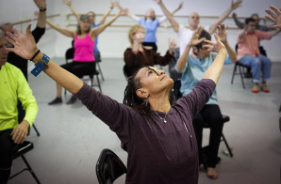
Through its innovative, internationally-replicated in-person and online classes, acclaimed teacher training program, and high quality media resources, Dance for PD’s fundamental working principle is that professionally-trained dancers are movement experts whose knowledge about balance, sequencing, rhythm and aesthetic awareness is useful to persons with PD. In class, teaching artists integrate movement from modern, ballet, tap, folkloric, traditional, improvisation, and social dancing, along with choreographic and cultural repertory to engage participants’ minds and bodies and create an enjoyable, social environment for artistic exploration.
Dance for PD has been featured in The New York Times, USA Today, Dance Magazine, The Guardian and hundreds of other publications,and has been honored by several local, national and international awards, including the Parkinson Awareness Award, Alan Bonander Humanitarian Award, and the Sapolin Public Service Award from the New York City Mayor’s Office for People with Disabilities.
Evidence from more than 55 peer-reviewed scientific studies from the United States, United Kingdom, Canada, Japan, Italy and Germany serves to underpin the effectiveness and benefits of the Dance for PD teaching practice and suggests that dance provides a range of benefits, including improved walking and short-term mobility, enhanced quality of life and self-efficacy, and improvements in mood and social inclusion among people with Parkinson’s.
Dance for PD, which began in 2001 as a collaboration between MMDG and Brooklyn Parkinson Group, leverages technology—online classes, on demand resources, and training and a popular instructional At Home video series—to make the program more available to its diverse and expanding network of constituents around the globe.
About IADMS
The International Association for Dance Medicine & Science, known as IADMS, is a global organization dedicated to advancing the health, wellbeing, training, and performance of dancers, as well as promoting and fostering research in Dance for Health. It brings together dance artists, educators, healthcare professionals, researchers, scientists, and students who are interested in how the body moves, learns, heals, and thrives through dance. IADMS
 supports the dance field by sharing research, practical knowledge, and evidence-informed approaches to injury prevention, rehabilitation, conditioning, and inclusive Dance for Health practice. Through conferences, publications, networks, and educational resources, it helps translate scientific and medical knowledge into tools that dancers and teachers can use. The organization also encourages collaboration across disciplines, connecting people who might otherwise work in separate worlds. For anyone involved in dance, IADMS offers a valuable bridge between artistry, health, science, and care.
About The Australian Ballet
Australia’s national ballet company, The Australian Ballet is one of the world’s leading ballet companies and has been inspiring and delighting audiences since 1962. Enriched by the talent and passion of the dancers, The Australian Ballet is committed to bringing the joy of ballet to audiences both at home and abroad. Representing a uniquely Australian style that is athletic, authentic, bold and expansive, The Australian Ballet continues to captivate and amaze audiences worldwide. Alongside its performances, The Australian Ballet supports education, community engagement, and access initiatives that bring dance to people of different ages and backgrounds. It also plays an important role in nurturing Australian choreographers, dancers, musicians, designers, and creative teams. 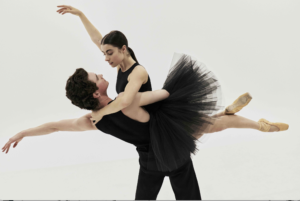
About Dance for Parkinson’s Australia
The Dance for Parkinson’s Australia (DPA) program started through an initial Dance for PD® presentation at the National Parkinson’s Conference in Brisbane in 2012. Since then, DPA Director Erica Rose Jeffrey, PhD, has worked with the dance and Parkinson’s communities to share the joys of dance classes for people with Parkinson’s. Working with Dance for PD® founding teacher and Program Director David Leventhal, the first Australian teacher training workshops were offered in May of 2013 in Sydney and Brisbane at Queensland Ballet. Dance for Parkinson’s Australia offers dance classes for people with Parkinson’s disease in ACT, Queensland, New South Wales, Tasmania, South Australia, Western Australia, and Victoria.
DPA provides high quality services to people living with Parkinson’s Disease (PD), partners, carers, friends, and the broader community of seniors. 2023 celebrated ten years of delivering the program, classes and workshops in Australia.
Partnerships and connections have been developed across the arts and health sectors and include the Opera Australia, Queensland Ballet, DanceNorth, the Sydney Opera House, Sydney Dance Company, Belconnen Arts Centre, Arts Health Network Queensland, Arts Health Network NSW/ACT, Ausdance, MADE Tasmania, the University of Queensland, Queensland University of Technology, state Parkinson’s organisations, and leading neurologists and researchers.
Dance for Parkinson’s Australia (DPA) is a public benevolent institution and charity with DGR status